Many business owners in Nairobi hear the word "ERP" and picture massive manufacturing plants with thousands of employees. They assume systems like Microsoft Dynamics 365 Business Central are only for large, established corporations.
But waiting until you are "big enough" is often the most expensive mistake a growing company can make.
At IpsumTek Consult Ltd, we help East African businesses transition from fragmented tools to unified systems. We frequently meet founders who waited too long, only to spend months untangling messy data. Here is a practical guide to knowing if your business has outgrown its current setup.
1. Hitting the "Excel Wall"
Most East African SMEs start with a basic accounting package and a lot of spreadsheets. This works perfectly when you have five employees and fifty customers. But growth introduces complexity that spreadsheets cannot handle.
You know you have hit the "Excel wall" when:
- Your team spends more time fixing broken spreadsheet formulas than analyzing the data.
- You have multiple versions of the "master" sales or inventory file floating around.
- The finance team takes three days to close the month because they are manually reconciling different systems.
When your tools require more manual effort than the actual work they are supposed to track, it is time to upgrade.
2. Practical Thresholds: It Is Not Just About Revenue
Business owners often ask us, "Do I need to be making 100 million shillings a year to justify an ERP?" The answer is no. The real trigger is not just revenue; it is operational complexity.
Look for these practical thresholds in your business:
- Transaction Volume: You are processing hundreds of invoices, receipts, or payments a month, and manual entry is causing frequent errors.
- Multi-Location Operations: You have opened a second branch, a warehouse, or a retail outlet, and you can no longer see your total inventory or cash position in real time.
- Team Size: You have crossed the 20-employee mark, and you need strict role-based access so staff only see the data relevant to their jobs.
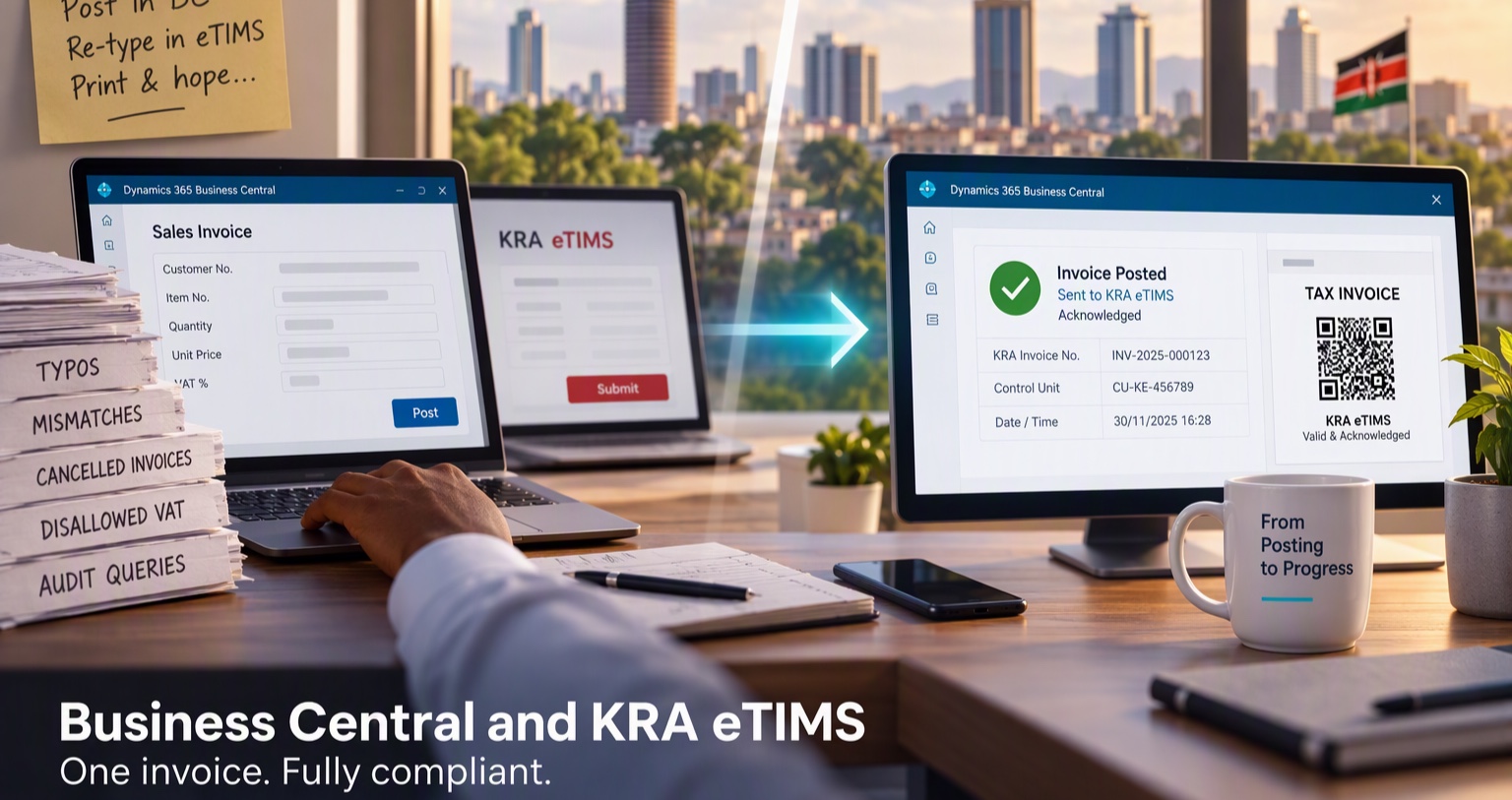
- Compliance Pressure: Regulatory requirements, like KRA eTIMS, are becoming too complex to manage manually without risking penalties.
If you are hitting two or more of these thresholds, you are ready for an ERP.
3. The Hidden Cost of Waiting
Delaying an ERP implementation feels like you are saving money. In reality, it creates "shadow IT" and hidden risks.
When official systems are too rigid, your team creates their own workarounds. They track critical orders on personal WhatsApp groups or manage inventory on local hard drives. This data is invisible to management and highly vulnerable to loss.
Furthermore, compliance becomes a major risk. As tax authorities digitize, manual processes lead to mismatched records, disallowed VAT claims, and audit queries. Implementing an ERP before a crisis hits gives you the time to implement it properly, rather than rushing under pressure.
4. Why Modern ERPs Are Built for SMEs
The old image of an ERP being a massive, clunky system that takes two years to install is outdated. Modern cloud ERPs like Microsoft Dynamics 365 Business Central are specifically designed for small and medium enterprises.
They are modular and scalable. You do not have to buy every feature on day one. You can start with core financial management and eTIMS compliance. As you grow, you can easily add modules for supply chain, manufacturing, or project management without changing the underlying system.
At IpsumTek Consult Ltd, we tailor the implementation to your current size, ensuring you only pay for and use what you actually need right now.
Conclusion
You do not need to be a massive corporation to benefit from an ERP. You just need to be at the point where your current tools are slowing you down rather than speeding you up.
Recognizing your practical thresholds early allows you to build a strong digital foundation for your next phase of growth.
At IpsumTek Consult Ltd, we help SMEs evaluate their current processes and implement tailored Microsoft ERP solutions that fit their exact size and needs. Contact us today at consult@ipsumtek.dev to discuss whether your business is ready for its first ERP.